Describe the finished use, not just the fixture count
Start with what the room must do: a family bathroom staying in place, a kitchen sink moving into an island, or a basement being prepared for a separate living area. Name the expected users and whether another bathroom remains available during the work. A fixture count alone misses the daily-use pattern, storage clearances and access needed to service valves later. Mark which fixtures are retained and which are new.
Separate your requirements from preferences. “Keep the upstairs toilet usable” is a scheduling requirement; “conceal all pipework” is a preference that may conflict with access and cost. Give a contractor permission to identify that conflict before quoting. Record one acceptable fallback, such as keeping a sink on its existing wall if the proposed drain route cannot be justified.
Map what is known about the existing building
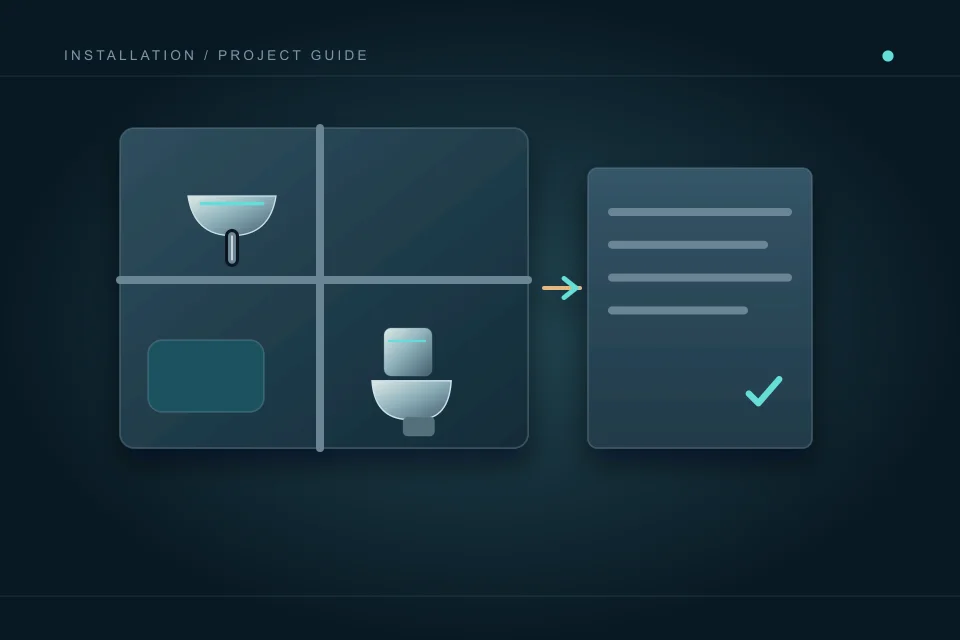
Provide a floor plan with the proposed fixtures and a few clear, safely taken photographs of accessible pipework. Identify the water entry, water-heating equipment, visible stack and any labelled shut-offs. You do not need to expose a wall or enter a cramped space to make the brief stronger. Label concealed conditions as unknown. A renovation drawing showing an assumed pipe should use a different annotation from a measured, visible connection.
Note previous leaks, drain problems, additions and any records available from earlier work. These observations influence the investigation; they do not prove the existing system is suitable. Ask the plumber what must be verified on site before a firm scope can be given. Keep destructive investigation as a separately agreed activity with its own access and reinstatement responsibilities.
Include the interfaces that other trades can change
Plumbing decisions depend on cabinet dimensions, shower assemblies, finished floor levels and structural framing. Give the exact fixture specification if it is selected, or state when selection will be complete. A wall-hung fixture and a floor-mounted fixture are not interchangeable rough-in assumptions. A deep sink or relocated dishwasher can also affect the space available for drainage and service access.
Identify the person coordinating carpentry, waterproofing, ventilation, electrical and finishing work. The plumbing quotation should explain its boundaries rather than quietly absorb every trade. A useful brief asks who protects occupied rooms, who creates access openings, who repairs those openings and who checks that a cabinet or vanity still allows valves to be reached after installation.
Assign approval and inspection responsibilities
The City distinguishes plumbing system construction or alteration from some limited repair and fixture-replacement work. Use the current Calgary permit guidance to discuss your actual scope with the authority or contractor. A project may also have building or suite approvals beyond its plumbing permit. Approval of one discipline should not be used as proof that every other part of a renovation is authorized.
Write down who applies, who holds the permit number, who books each inspection and who responds to a deficiency. Keep “the contractor handles permits” from becoming an undocumented assumption. If an apartment-style condominium is involved, identify the property manager and the building approval process before a route or water shut-down is promised.
Separate included work, options and unknown conditions
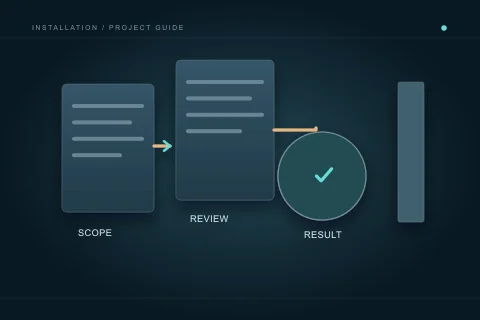
Request a base scope and clearly described alternatives. For example, retaining a fixture location may be the base, while moving it across the room is an option requiring further investigation. Unknown concealed conditions belong in a list with an agreed way to authorize additional work. They should not disappear behind a broad phrase such as “complete plumbing.”
Use the scope planner to collect rooms and open decisions. For budget organization, use only received quotations in the quoted-budget ledger. No reference page can establish the installed price of your particular building. Materials, access, restoration and the approved route need to be known before prices become comparable.
Send a brief a person can actually review
End with the location, property type, decision-maker, intended timing and your preferred contact method. Include whether the home is occupied and whether you are seeking investigation, design coordination or an installation quotation. Avoid sending tenant names, account credentials or unrelated personal records. Redact documents before attaching them to a contractor discussion.
A useful first request says: “Kitchen renovation, sink proposed on the island, existing stack visible in the basement, cabinet drawings not final, occupied home, landlord not applicable. Please identify the investigations and approvals needed before a fixed scope.” This reference does not employ a plumbing crew. A request for review is read by a person; it is not an emergency booking or a promise of availability.
Questions people ask
Should I draw the pipe sizes?
Show fixture positions and accessible existing connections. Leave pipe sizing and compliance decisions to the qualified designer or plumber. A guessed dimension can mislead a quotation more than an honestly labelled unknown.
Can photographs replace an on-site visit?
Photographs help identify the work and visible interfaces, but do not establish concealed routes, levels or system condition. Ask which site checks are needed and what remains provisional until they are done.
What should I send before fixtures are selected?
Send the intended fixture types, room layout and selection deadline. Clearly label unselected models so a contractor can state assumptions and avoid fixing a rough-in around an imagined product.
Is this site the installer?
No. It is a Calgary installation reference with a human-reviewed request service. It does not claim to perform the work, hold a contractor licence or guarantee a response time.
Sources and further reading
- Homeowner electrical and plumbing permits ↗ · City of Calgary. Checked 2026-10-02.
- Plumbing and gas permits ↗ · City of Calgary. Checked 2026-10-02.
- Hiring a contractor ↗ · City of Calgary. Checked 2026-10-02.
Confirm the current requirements with the responsible authority for the actual address and work. This reference does not replace site assessment or an official decision.