Start with the actual permit and stage
Record the permit reference, applicant, affected rooms and systems. Identify whether the planned visit concerns rough work, final installation or another confirmed stage. Do not infer the inspection scope from an old renovation result or another trade’s approval. New construction, extension and alteration of plumbing require the applicable process in Calgary’s guidance.
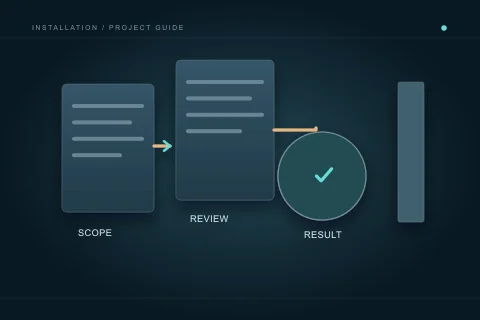
Name who books attendance, supplies access and receives the result. If the owner is coordinating several trades, keep each trade’s status separate. A building inspection and plumbing result are not interchangeable. The programme should show dependencies clearly enough that a finish installer does not close work because someone remembers that “an inspector came” without identifying the actual approved scope.
Review the City’s rough readiness items
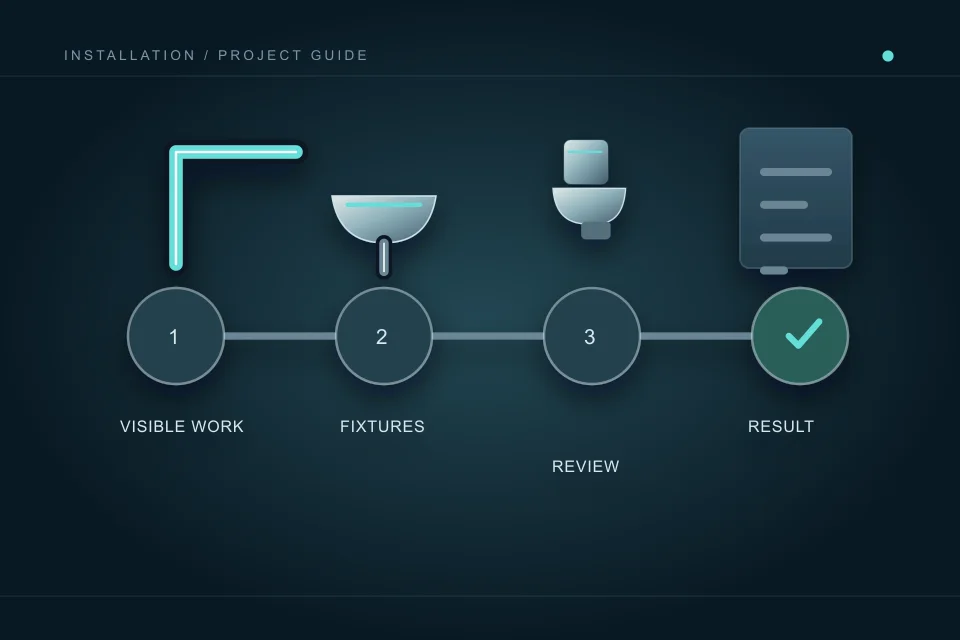
Calgary’s homeowner guidance calls for drainage and venting to be complete, water supply connected, all piping supported and shower or bath valves installed for the rough stage. Have the responsible contractor check the actual project against the applicable requirements. This reference does not specify test methods or technical support design; those remain professional and authority matters.
Keep relevant work visible and accessible, and resolve product selections that affect the installed rough-in. A missing concealed valve or provisional connection can make the room appear further along than its actual readiness. Record outstanding items with a responsible person and date. The tool’s six preparation checks help organize that discussion but do not certify compliance or replace the inspector’s result.
Coordinate attendance and safe access
Ask how the inspector reaches affected rooms and what information or person must be available. Keep the work area appropriately prepared through the contractor and project process. If the property is occupied, tell occupants about restrictions and attendance. In a managed building, arrange required permissions or access rather than assume another unit or common room can be entered immediately.
Schedule concealment only around the actual inspection and correction process. Allow programme time for a result that requires action. A booked date is not a guaranteed pass, and a contractor’s internal review is not the authority result. Do not pressure another trade to close piping before unresolved items are addressed simply because a delivery or finish appointment is already booked.
Distinguish final fixture readiness from rough completion
The final stage needs the actual fixtures ready and the applicable finished installation available for review. Calgary’s homeowner guidance includes properly capped future piping, toilet shut-offs and a maximum shower or bath temperature of 49°C. Have the qualified contractor manage applicable setup and verification. The article does not instruct owners to adjust controls or select test equipment.
Identify incomplete trim, accessories, future provisions and any restricted use. A functioning tap is not proof that all final requirements are complete. Keep rough approval, final fixtures and final result as separate records. If a product or route changed after rough review, ask the contractor and authority what further process is required before assuming the earlier result still covers the revised installation.
Retain the actual result and correction record
Save the inspection result, date, scope and any correction requirements. Assign who completes corrections and who confirms the follow-up process. Do not rely solely on a verbal recollection that work was acceptable. If the result concerns only part of phased work, preserve that limitation so a future owner does not treat an incomplete provision as fully approved fixture use.
Connect corrections to the programme and commercial scope without asking the owner to redesign technical work. A changed product or additional access may also need a written project decision. Keep the result and approved changes together. The purpose is a traceable process that explains what happened, rather than a blanket statement that every plumbing component in the building was inspected.
Use results as one part of handover
At handover, combine permit results with actual route information, fixture identification, owner-accessible controls and remaining deficiencies. Inspection evidence answers a particular approval question; it does not replace manuals, warranties or a clear contracted work boundary. Record retained or unassessed existing piping separately from new work. The owner should know what information supports completion.
If a later symptom appears, report the affected fixtures and timing with the work record. Do not assume a passed stage eliminates every maintenance issue or proves an unrelated retained system is sound. A qualified review can use the record to assess the new concern. The readiness tool and article remain planning aids, while actual acceptance is demonstrated by the applicable results.
Questions people ask
Does checking every readiness box authorize concealment?
No. It organizes preparation. Follow the actual inspection and correction process for the permit scope before closing work.
Is a contractor’s internal review the same as a City result?
No. Keep the qualified contractor’s review and authority inspection result distinct, with their scope and dates.
What if the fixture selection changes after rough inspection?
Have the contractor and authority review the effect and any further process required. Retain the revised scope and result.
What should be saved after a correction?
The original result, action taken, relevant updated records and any required follow-up result, with responsible parties and dates.
Sources and further reading
- Homeowner electrical and plumbing permits ↗ · City of Calgary. Checked 2026-10-02.
- Plumbing and gas permits ↗ · City of Calgary. Checked 2026-10-02.
- Plumbing codes and standards ↗ · Government of Alberta. Checked 2026-10-02.
Confirm the current requirements with the responsible authority for the actual address and work. This reference does not replace site assessment or an official decision.