Reconcile the agreed scope with completed work
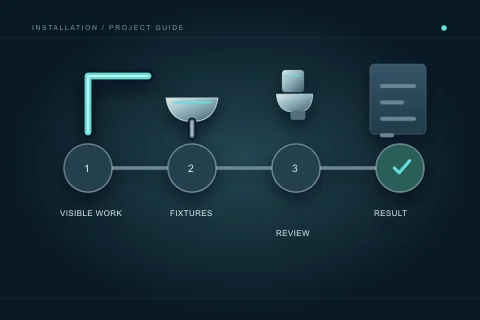
Use the final written agreement and approved changes to identify installed rooms, fixtures and affected systems. Mark completed items, outstanding work and exclusions. If the actual route or product changed, update the record rather than leave an early proposal as the only description. A final invoice should be understandable alongside that scope, not require the owner to guess what “plumbing completed” means.
Separate installation from finish restoration, moisture work and other trades. Confirm who completes each outstanding interface and whether use remains restricted. A room can look finished while an accessory, approval result or reinstatement item remains unresolved. Use explicit deliverables to close the project and record a practical follow-up process for deficiencies.
Collect the applicable approval results
Retain permit references, rough and final results and any correction record for the actual work. Calgary’s permit guidance explains the trade inspection stages. Do not treat another trade’s result as the plumbing result or a scheduled visit as acceptance. If work was phased, state the approved scope and limitations clearly.
Keep the installation record separate from broader project approvals, such as suite or building requirements. A plumbing result does not establish every occupancy or planning condition. Ask the project coordinator to identify remaining approvals before describing the overall project as ready. Future owners benefit from exact dated records rather than a vague assurance that everything was handled.
Save actual routes while they remain accessible
Photograph concealed work from safe access before closure, with room and date labels. Retain actual route notes and relevant revised drawings. The images help later maintenance but do not replace inspection or certify pipe design. Avoid using a conceptual illustration as an as-built record when the contractor chose a different arrangement on site.
Identify retained piping and areas outside assessment. Record capped future provisions with their intended purpose and completed stage. A future connection should not be presented as suitable for any fixture without review. This honest distinction prevents the next renovation from assuming all visible or documented lines were installed, tested and approved as part of the recent project.
Keep the exact installed product schedule
Gather models, manuals, purchase records and warranties for fixtures and relevant devices. Identify approved substitutions and owner-supplied components. Product warranty, labour commitments and future service agreements are distinct. Ask who is the first contact for a later symptom and what information they need before arranging a review.
Retain cross-connection device and qualified testing records where applicable under Calgary’s programme. Do not assume an installed device’s appearance proves required testing is complete. The handover should identify the actual ongoing responsibilities for the property rather than attach a generic maintenance promise that may not fit the selected products or programme.
Ask for an appropriate owner demonstration
Have the contractor explain ordinary owner-accessible controls, installed-product use and any remaining restrictions. Keep utility, building-managed and service-only controls distinct. A demonstration should follow the actual manufacturer information and installation, not teach an owner to dismantle fixtures, adjust gas or electrical equipment or force unfamiliar valves.
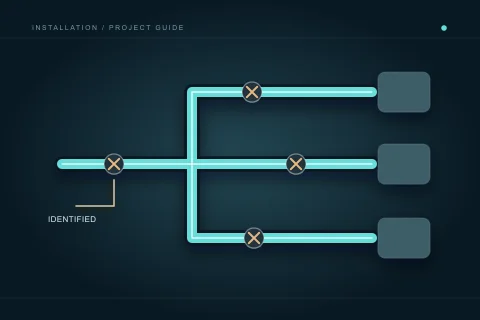
Record the accessible control locations and served areas confirmed by the contractor. Coordinate this with managed-building contacts where relevant. If an unsafe event occurs later, the record can help a direct responder, but it does not make flooded or contaminated areas safe to enter. Current conditions and emergency instructions take priority over a diagram showing a nearby control.
Establish a clear deficiency and service process
List outstanding items, responsible parties and agreed next steps. Keep follow-up communications and completion records with the original file. Ask what observation should trigger further contact and whether a new assessment falls outside the completed scope. Avoid promises that a passed inspection or replaced fixture prevents every future plumbing symptom.
For later work, send the actual records with a factual symptom description rather than an assumed cause. A human-reviewed installation request can help organize an unresolved planning decision, but it does not certify prior work or guarantee contractor attendance. A useful handover reduces uncertainty because it preserves evidence, not because it labels the entire building system as permanently trouble free.
A simple closeout list can use four columns: item, evidence received, remaining action and responsible contact. Keep outstanding items visible until the agreed action is documented, rather than removing them because the final invoice arrived.
Questions people ask
Does a working tap establish final completion?
No. Compare the agreed scope, approvals, documentation, interfaces and outstanding items. Ordinary operation is only one observation.
Are photographs proof of code compliance?
No. They record routes and context. Retain actual applicable inspection results and qualified installation records separately.
What if some existing piping was never assessed?
State that limitation clearly. New work and retained or unassessed work should remain distinguishable in the handover file.
Who should receive a later warranty request?
Use the agreed contact process and provide product, installation and symptom records. Product and labour commitments may have different responsible parties.
Sources and further reading
- Homeowner electrical and plumbing permits ↗ · City of Calgary. Checked 2026-10-02.
- Cross Connection Control Program ↗ · City of Calgary. Checked 2026-10-02.
- Hiring a contractor ↗ · Government of Alberta. Checked 2026-10-02.
Confirm the current requirements with the responsible authority for the actual address and work. This reference does not replace site assessment or an official decision.